
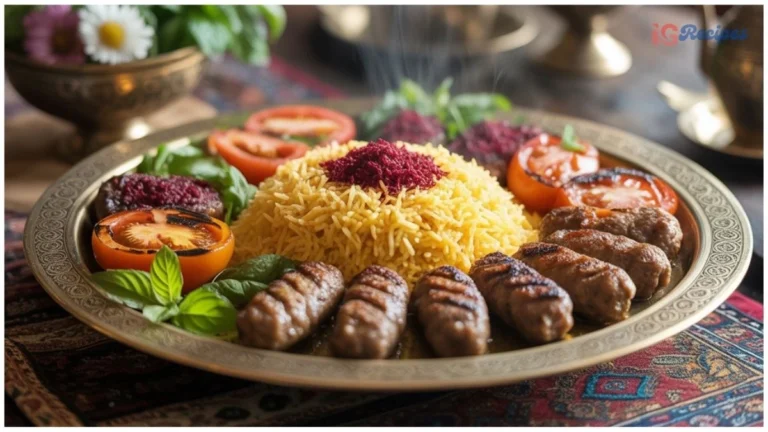

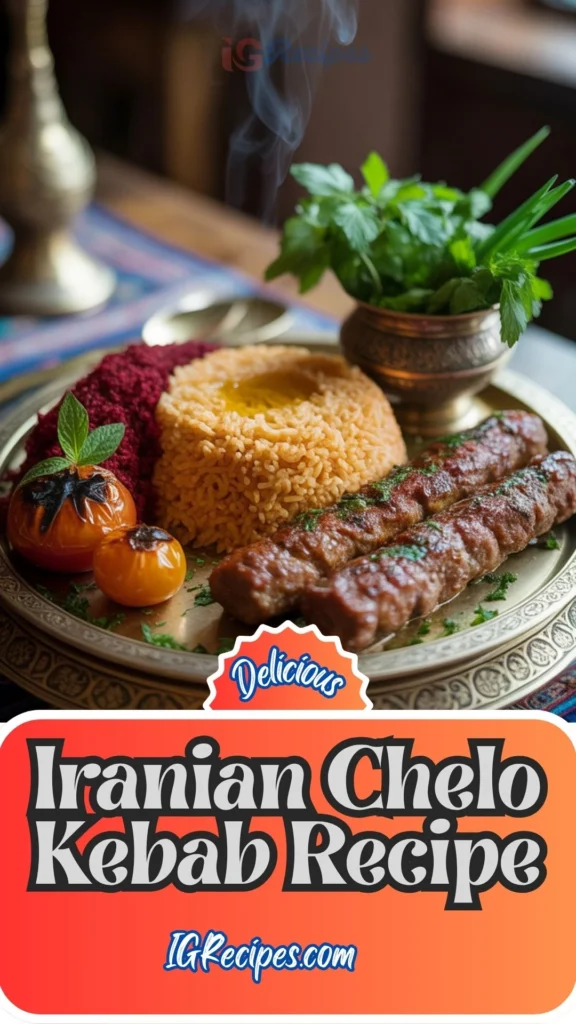
There’s something magical about Iranian chelo kebab that transforms a simple meal into a culinary celebration. This iconic Persian dish combines juicy, spiced ground meat skewers grilled to perfection alongside fragrant saffron rice, creating a symphony of flavors that’s been cherished across generations.
Whether you’ve tasted this at a Persian restaurant or you’re discovering it for the first time, this copycat Iranian chelo kebab recipe brings the authentic tastes of Iran right into your home kitchen.
The combination of tender kebabs, buttery rice, and charred tomatoes creates an unforgettable dining experience that’ll have everyone asking for seconds.
What Does Iranian Chelo Kebab Taste Like?
Iranian chelo kebab delivers a beautiful balance of savory, aromatic, and subtly smoky flavors. The ground meat kebabs are incredibly juicy with warm notes of turmeric, black pepper, and gentle heat from chili flakes.
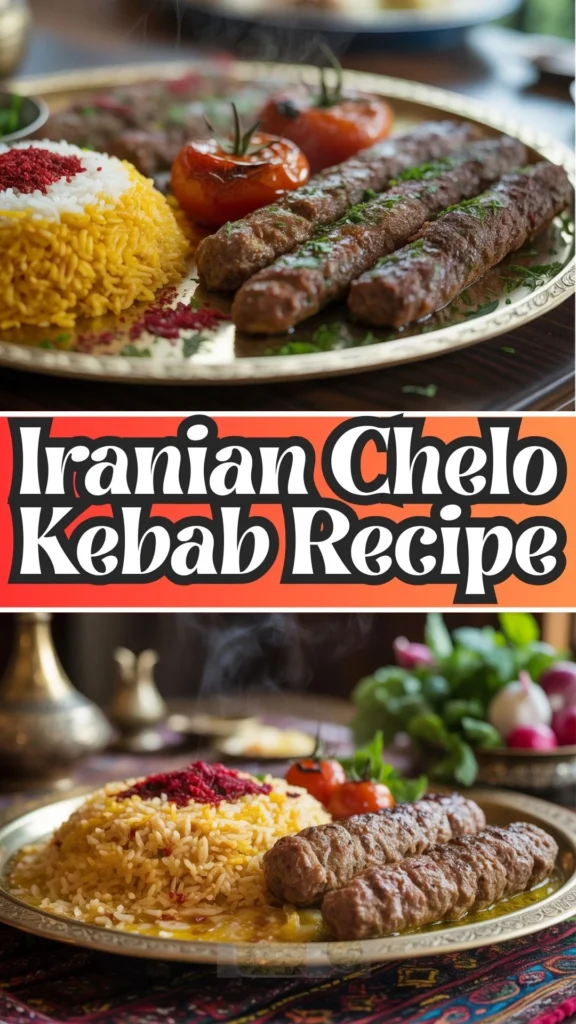
The nefron fat (kidney fat) adds richness and keeps each bite moist and tender. The saffron rice brings floral, honeyed undertones that complement the spiced meat perfectly, while the charred tomatoes add a sweet-tart element.
Fresh raw onions provide a sharp, crisp contrast that cuts through the richness. Together, these components create a harmonious dish that’s both comforting and sophisticated a true taste of Persian culinary tradition.
Ingredients You’ll Need
For the Kebabs:
- 2 kg beef mince (or 1 kg for half recipe)
- 400g nefron fat (kidney fat), finely minced (5:1 meat-to-fat ratio)
- 2 large onions, ground and pulp extracted
- 2 eggs
- ¼ cup ground roasted chickpeas
- 2 teaspoons turmeric powder
- 3-4 teaspoons salt
- 3-4 teaspoons chili flakes
- 2 teaspoons chili powder
- 3-4 teaspoons black pepper
For the Rice:
- 2 cups basmati rice, boiled
- A pinch of saffron threads
- 3 tablespoons boiling water
- 2-3 tablespoons butter
For Serving:
- 6-8 medium tomatoes
- 1-2 white onions, cubed
- Fresh herbs (optional)
Kitchen Utensils You’ll Need
- Food processor or grinder
- Large mixing bowl or tray
- Fine mesh strainer or cheesecloth
- Wide flat metal skewers (Persian-style)
- Barbecue grill or grill pan
- Small bowl for saffron water
- Food warmers or covered dishes
- Rice cooker or large pot
- Tongs for grilling
Preparation and Cooking Time
Prep Time: 30 minutes
Cooking Time: 25-30 minutes
Total Time: 55-60 minutes
Servings: 8-10 people (makes approximately 25 kebabs)
Step-by-Step Recipe Instructions
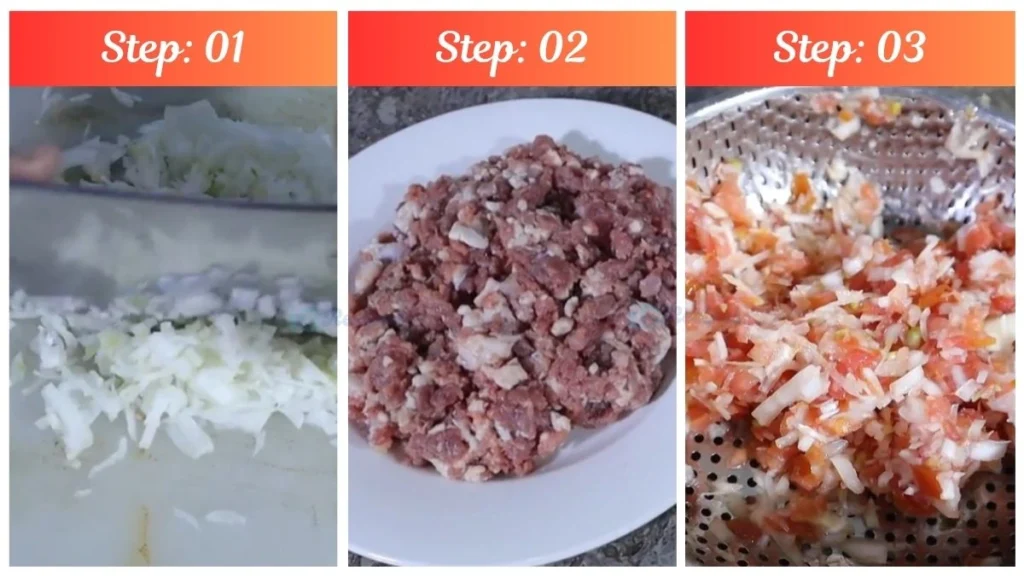
Step 1: Prepare the Onion Pulp
Grind 2 large onions in a food processor until completely smooth. Transfer to a fine mesh strainer or cheesecloth and squeeze firmly to extract all the onion water. Reserve only the dry onion pulp for the kebab mixture. Save the onion water if desired it can be used as a hair treatment once weekly.
Step 2: Make Roasted Chickpea Powder
Grind roasted chickpeas in a food processor until they become a fine powder. Measure out ¼ cup and set aside. This acts as a binding agent for the kebabs.
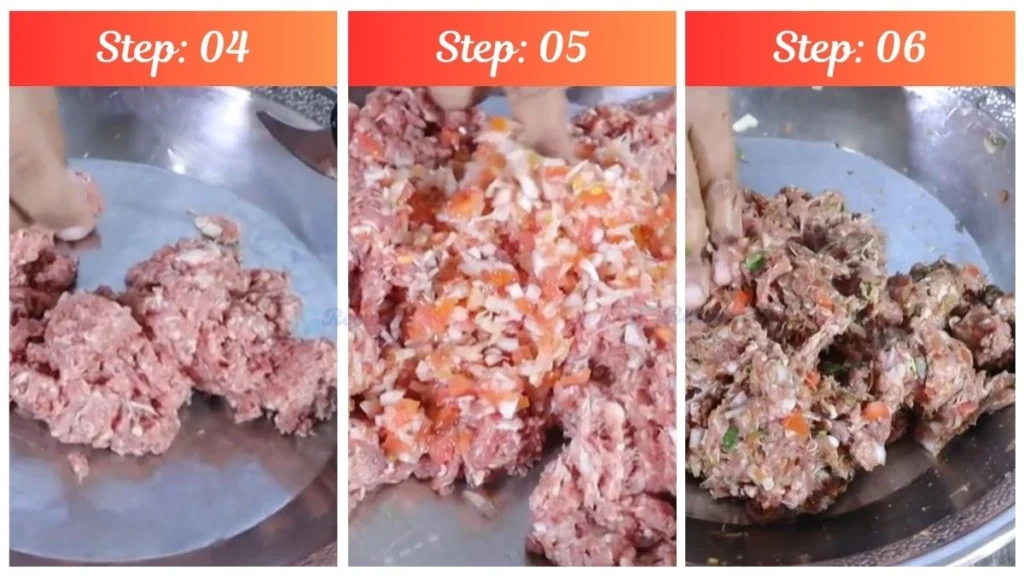
Step 3: Combine the Kebab Mixture
In a very large mixing bowl or tray, combine the beef mince, finely ground nefron fat, onion pulp, 2 teaspoons turmeric, 3-4 teaspoons salt, 3-4 teaspoons chili flakes, 2 teaspoons chili powder, 3-4 teaspoons black pepper, 2 eggs, and ¼ cup ground roasted chickpeas. Mix thoroughly with your hands until all ingredients are evenly distributed. If the bowl feels too small, transfer to a large tray for easier mixing.
Step 4: Shape the Kebabs onto Skewers
Take a portion of the meat mixture and press it firmly onto a wide, flat metal skewer. Shape the meat into an elongated oval, creating distinctive indents along the surface using your fingers. These indents help the kebab stay on the skewer and create more surface area for grilling. Each kebab should be about 6-8 inches long. Repeat until all meat is used (approximately 25 kebabs from 2kg meat).
Step 5: Grill the Kebabs
Preheat your barbecue grill to medium-high heat. Place the skewered kebabs directly on the grill and cook for 5-6 minutes, turning occasionally, until golden brown and cooked through. The kebabs will shrink slightly as they cook.
Step 6: Remove from Skewers
To remove the kebabs from the skewers without breaking them, gently push each kebab back slightly to release it from the front, then carefully slide it off. Keep the cooked kebabs warm in a food warmer or covered dish.
Step 7: Prepare Saffron Rice
Steep a pinch of saffron threads in 3 tablespoons of boiling water for 10 minutes. Reserve ½ cup of your cooked basmati rice and mix it with the saffron water until the rice turns golden yellow.
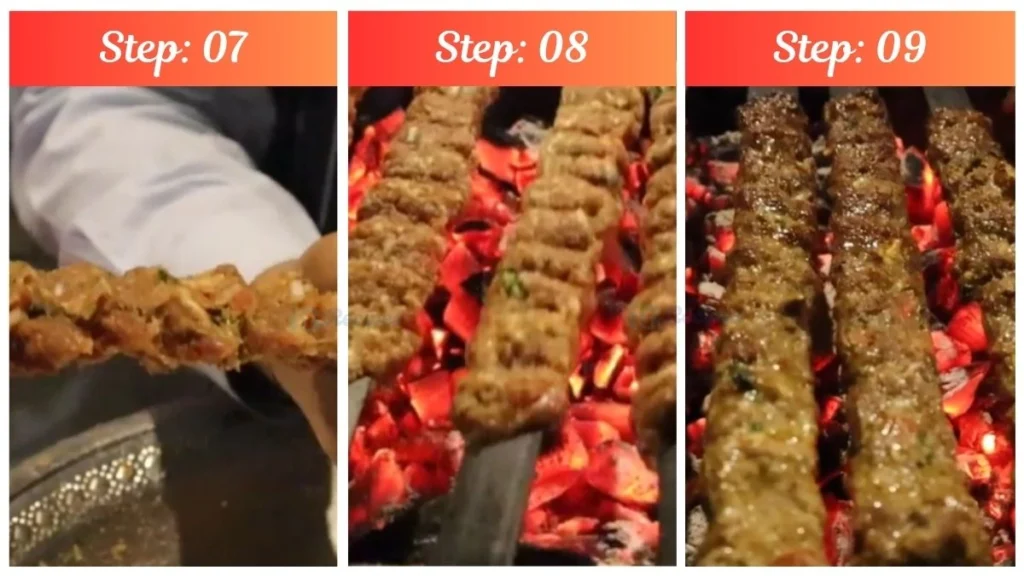
Step 8: Grill the Tomatoes
Thread whole tomatoes onto skewers and grill them over an open flame or on the barbecue until their skins blister and they begin to soften, about 3-4 minutes. Keep them warm.
Step 9: Assemble and Serve
On each serving plate, create a bed of plain white rice, then add a portion of saffron rice on top. Place 2-3 kebabs alongside the rice, add a grilled tomato, and scatter cubed raw onion over the dish. Top the rice with a pat of butter that will melt into the warm grains. Serve immediately.
7 Customization and Pairing Ideas for Your Iranian Chelo Kabab
1. Lamb and Beef Combination
While this Iranian chelo kebab recipe uses beef mince, you can create a more complex flavor by mixing 60% beef with 40% lamb mince. The lamb adds a distinctive gamey richness that’s traditional in many Persian households and pairs beautifully with the aromatic spices.
2. Yogurt and Herb Side (Mast-o-Khiar)
Serve your chelo kebab with a cooling cucumber yogurt dip mixed with dried mint and dill. This refreshing accompaniment balances the smoky, spiced meat and is a classic Persian pairing that adds probiotics and a tangy contrast to the rich kebabs.
3. Fresh Herb Platter (Sabzi Khordan)
Create an authentic Iranian dining experience by serving a platter of fresh herbs alongside your kebab include basil, mint, tarragon, radishes, and spring onions. Iranians traditionally eat these fresh herbs between bites to cleanse the palate and aid digestion.
4. Sumac and Barberry Rice Upgrade
Elevate your saffron rice by mixing in dried barberries (zereshk) and a sprinkle of sumac. The tart barberries add jewel-like pops of color and fruity acidity, while sumac brings a lemony brightness that complements the kebab’s savory profile perfectly.
5. Grilled Vegetable Medley
Expand beyond tomatoes by grilling bell peppers, eggplant slices, and whole jalapeños. These charred vegetables add variety to your plate and create a more complete meal. The smoky vegetables echo the grilled flavor of the kebabs while adding nutritional diversity.
6. Lavash Bread Wraps
Transform your copycat Iranian chelo kebab recipe into a portable feast by serving with warm lavash or sangak bread. Guests can wrap the kebab, rice, herbs, and tomatoes in the flatbread for a delicious handheld version perfect for casual gatherings.
7. Pomegranate Molasses Drizzle
Add a finishing touch by drizzling pomegranate molasses over the assembled dish just before serving. This sweet-tart syrup is quintessentially Persian and adds a glossy, sophisticated element that intensifies the Middle Eastern flavor profile beautifully.
7 Essential Tips for Perfect Iranian Chelo Kebab
1. The Nefron Fat is Non-Negotiable
Using kidney fat (nefron) rather than regular beef fat is crucial for authentic Iranian chelo kabab. This harder fat has a higher melting point, which means your kebabs will hold together beautifully on the skewers without falling apart. The 5:1 meat-to-fat ratio ensures juiciness without greasiness. Ask your butcher to mince both the meat and nefron fat together finely this makes mixing easier and creates a more cohesive texture.
2. Extract Only the Onion Pulp, Not the Juice
The onion water contains excess moisture that will make your kebab mixture too wet and prevent proper binding. By squeezing out the liquid and using only the fibrous pulp, you get the onion’s sweet flavor and binding properties without compromising texture. This step is what separates amateur kebabs from restaurant-quality ones.
3. Create Those Signature Indents
The distinctive grooves pressed into Persian kebabs aren’t just decorative they serve multiple purposes. These indents increase the surface area exposed to heat, allowing more caramelization and flavor development. They also create a mechanical grip that keeps the meat secured to the skewer, even as it shrinks during cooking. Use your fingertips to create deep, evenly-spaced grooves.
4. Don’t Skip the Roasted Chickpea Powder
Ground roasted chickpeas act as a natural binder that holds the kebab mixture together without making it heavy like breadcrumbs would. This traditional ingredient adds a subtle nutty flavor and helps achieve that perfect tender-yet-firm texture. You can roast dried chickpeas in a dry pan until golden, then grind them, or purchase pre-roasted chickpeas from Middle Eastern stores.
5. Freeze Extras for Effortless Future Meals
This recipe makes about 25 kebabs, which is perfect for freezing. Shape all the kebabs onto skewers, then freeze them individually on a baking sheet before transferring to freezer bags. They’ll keep for up to 3 months and can be grilled directly from frozen just add 2-3 extra minutes to the cooking time. This meal prep strategy makes weeknight Persian dinners incredibly easy.
6. Master the Saffron Steeping Technique
Quality saffron is expensive, so maximize its flavor and color by steeping it properly. Use boiling water and let it sit for at least 10 minutes before mixing with rice. Some Persian cooks add a small ice cube to the saffron water as it melts, it helps extract even more color and aroma. The resulting golden rice should be intensely aromatic and vibrantly colored.
7. Maintain Temperature Throughout Service
Persian cuisine emphasizes serving everything hot, so using food warmers or keeping dishes covered is essential for an authentic experience. The butter added to the rice should melt slowly into the grains, and the kebabs should still be steaming when they reach the table. If you don’t have food warmers, preheat your serving dishes and tent everything with aluminum foil to retain heat during the final assembly.
Storage and Reheating Guidance
Store leftover kebabs and rice separately in airtight containers in the refrigerator for up to 3 days. Reheat kebabs gently in a covered pan with a splash of water to prevent drying, or microwave for 1-2 minutes. Rice reheats best when sprinkled with water and steamed. Uncooked kebabs freeze excellently for up to 3 months on their skewers.
Iranian Chelo Kebab Recipe
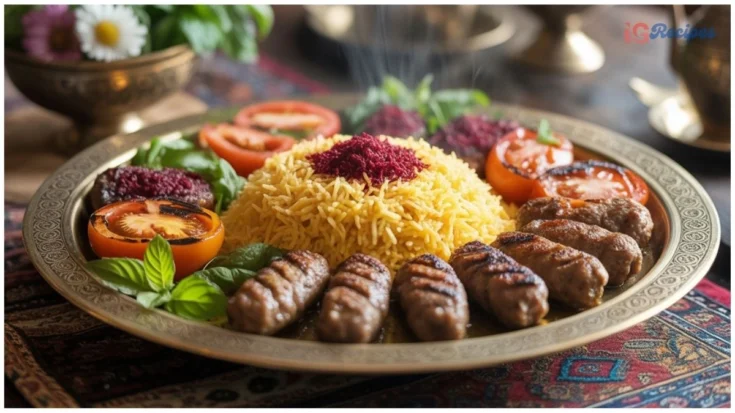
There’s something magical about Iranian chelo kebab that transforms a simple meal into a culinary celebration. This iconic Persian dish combines juicy, spiced ground meat skewers grilled to perfection alongside fragrant saffron rice, creating a symphony of flavors that’s been cherished across generations.
Ingredients
- 2 kg beef mince (or 1 kg for half recipe)
- 400g nefron fat (kidney fat), finely minced (5:1 meat-to-fat ratio)
- 2 large onions, ground and pulp extracted
- 2 eggs
- ¼ cup ground roasted chickpeas
- 2 teaspoons turmeric powder
- 3-4 teaspoons salt
- 3-4 teaspoons chili flakes
- 2 teaspoons chili powder
- 3-4 teaspoons black pepper
- 2 cups basmati rice, boiled
- A pinch of saffron threads
- 3 tablespoons boiling water
- 2-3 tablespoons butter
- 6-8 medium tomatoes
- 1-2 white onions, cubed
- Fresh herbs (optional)
Instructions
Step 1. Prepare the Onion Pulp: Grind 2 large onions in a food processor until completely smooth. Transfer to a fine mesh strainer or cheesecloth and squeeze firmly to extract all the onion water. Reserve only the dry onion pulp for the kebab mixture. Save the onion water if desired it can be used as a hair treatment once weekly.
Step 2. Make Roasted Chickpea Powder: Grind roasted chickpeas in a food processor until they become a fine powder. Measure out ¼ cup and set aside. This acts as a binding agent for the kebabs.
Step 3. Combine the Kebab Mixture: In a very large mixing bowl or tray, combine the beef mince, finely ground nefron fat, onion pulp, 2 teaspoons turmeric, 3-4 teaspoons salt, 3-4 teaspoons chili flakes, 2 teaspoons chili powder, 3-4 teaspoons black pepper, 2 eggs, and ¼ cup ground roasted chickpeas. Mix thoroughly with your hands until all ingredients are evenly distributed. If the bowl feels too small, transfer to a large tray for easier mixing.
Step 4. Shape the Kebabs onto Skewers: Take a portion of the meat mixture and press it firmly onto a wide, flat metal skewer. Shape the meat into an elongated oval, creating distinctive indents along the surface using your fingers. These indents help the kebab stay on the skewer and create more surface area for grilling. Each kebab should be about 6-8 inches long. Repeat until all meat is used (approximately 25 kebabs from 2kg meat).
Step 5. Grill the Kebabs: Preheat your barbecue grill to medium-high heat. Place the skewered kebabs directly on the grill and cook for 5-6 minutes, turning occasionally, until golden brown and cooked through. The kebabs will shrink slightly as they cook.
Step 6. Remove from Skewers: To remove the kebabs from the skewers without breaking them, gently push each kebab back slightly to release it from the front, then carefully slide it off. Keep the cooked kebabs warm in a food warmer or covered dish.
Step 7. Prepare Saffron Rice: Steep a pinch of saffron threads in 3 tablespoons of boiling water for 10 minutes. Reserve ½ cup of your cooked basmati rice and mix it with the saffron water until the rice turns golden yellow.
Step 8. Grill the Tomatoes: Thread whole tomatoes onto skewers and grill them over an open flame or on the barbecue until their skins blister and they begin to soften, about 3-4 minutes. Keep them warm.
Step 9. Assemble and Serve: On each serving plate, create a bed of plain white rice, then add a portion of saffron rice on top. Place 2-3 kebabs alongside the rice, add a grilled tomato, and scatter cubed raw onion over the dish. Top the rice with a pat of butter that will melt into the warm grains. Serve immediately.
Notes
Store leftover kebabs and rice separately in airtight containers in the refrigerator for up to 3 days. Reheat kebabs gently in a covered pan with a splash of water to prevent drying, or microwave for 1-2 minutes. Rice reheats best when sprinkled with water and steamed. Uncooked kebabs freeze excellently for up to 3 months on their skewers.
Nutrition Information:
Yield:
4Serving Size:
1Amount Per Serving: Calories: 180
Common Questions About Iranian Chelo Kebab
Can I make this Iranian chelo kebab recipe without a grill?
Absolutely! While a barbecue gives the most authentic smoky flavor, you can cook these kebabs in a grill pan on your stovetop over medium-high heat, or even broil them in your oven. Place the skewers on a broiler pan about 4 inches from the heating element and cook for 5-6 minutes, turning once.
What can I substitute for nefron (kidney) fat?
While nefron fat is ideal for its binding properties, you can substitute lamb tail fat or beef suet if kidney fat is unavailable. Avoid using softer fats like regular ground beef fat, as they’ll melt too quickly and cause the kebabs to fall apart. Some cooks use a small amount of grated frozen butter as a last resort, though the texture won’t be quite as authentic.
How do I prevent my kebabs from falling off the skewers?
The combination of proper fat ratio, roasted chickpea powder, eggs, and thorough mixing creates a mixture that naturally clings to skewers. Make sure your meat mixture is well-chilled before shaping (refrigerate for 30 minutes if needed), press the meat firmly onto the skewers, and create those functional indents.
Is this dish very spicy?
This copycat Iranian chelo kebab recipe has a moderate, warming heat rather than intense spiciness. The combination of chili flakes and chili powder provides depth and complexity without overwhelming the other flavors.
Can I use chicken or turkey instead of beef?
While traditional Persian chelo kebab uses beef or lamb, you can adapt this recipe for poultry. Use ground chicken or turkey thigh meat (not breast, which is too lean) and add 2-3 tablespoons of olive oil to the mixture since poultry lacks the natural fat content. The flavor profile will be lighter and less rich, but still delicious with the aromatic spice blend.
What type of rice is best for this dish?
Long-grain basmati rice is essential for authentic Iranian chelo kebab. This aromatic rice variety has the perfect texture fluffy, separate grains that don’t clump together. Iranian cooks traditionally soak basmati rice for 30 minutes to 2 hours before cooking to achieve extra-long, separated grains.
Why do Iranians eat raw onion with chelo kebab?
Raw onion is a traditional accompaniment in Persian cuisine, serving both culinary and digestive purposes. The sharp, pungent flavor cuts through the richness of the fatty meat and buttery rice, cleansing the palate between bites.
This authentic Iranian chelo kebab recipe brings the vibrant flavors of Persian cuisine into your home with surprisingly simple techniques. The combination of perfectly spiced meat kebabs, fragrant saffron rice, and traditional accompaniments creates a restaurant-worthy meal that’s perfect for family gatherings or special occasions.
The beauty of this dish lies in its make-ahead friendly nature shape and freeze those kebabs for effortless future feasts. Once you master this copycat Iranian chelo kebab recipe, you’ll understand why it’s been beloved across generations.
Fire up that grill and experience the magic of Persian cooking tonight!
You can also follow us on Pinterest, and YouTube for more delicious updates and kitchen inspiration. Your feedback and support mean the world to us!