
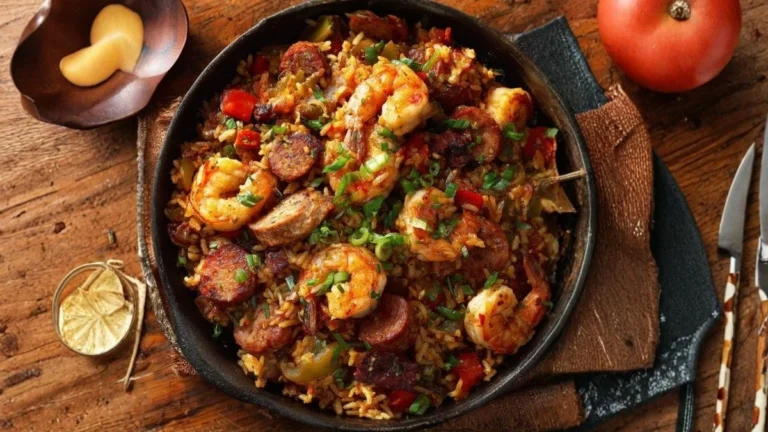

There’s something magical about a steaming pot of authentic jambalaya that brings everyone to the table.
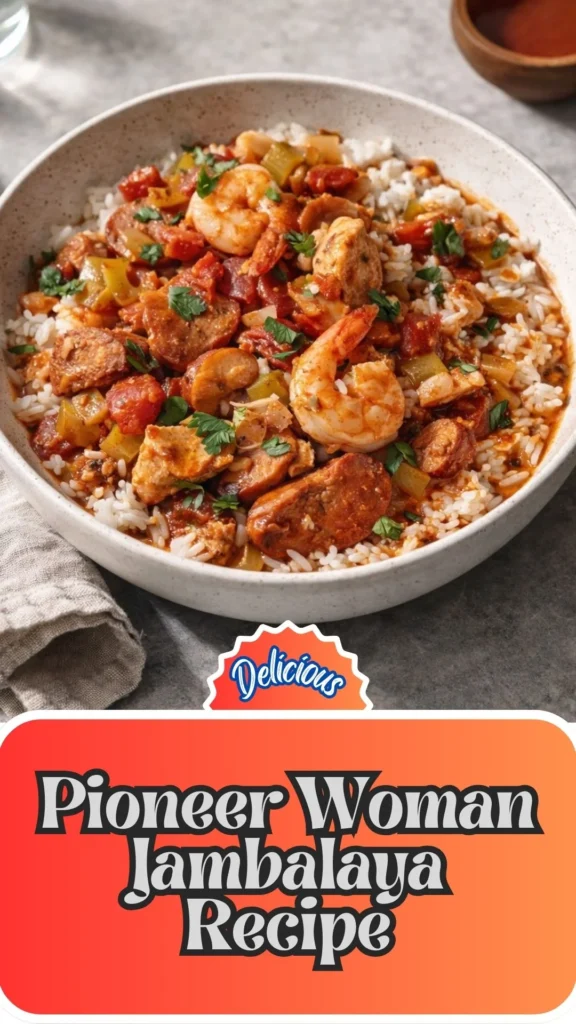
This copycat Pioneer Woman jambalaya recipe delivers all the bold, soulful flavors of Louisiana’s beloved one-pot wonder right in your own kitchen. Packed with tender chicken, smoky Andouille sausage, plump shrimp, and perfectly seasoned rice swimming in a rich tomato-kissed broth, this jambalaya recipe easy enough for weeknight dinners yet impressive enough for entertaining.
Whether you’re craving Creole comfort food or looking to master how to make Pioneer Woman jambalaya, this recipe will become your go-to for hearty, flavorful meals that feed a crowd.
What Does Pioneer Woman Jambalaya Taste Like?
This chicken and sausage jambalaya recipe is a flavor explosion in every spoonful. The homemade Cajun seasoning creates a warm, smoky foundation with hints of garlic, paprika, and just the right kick of cayenne heat.
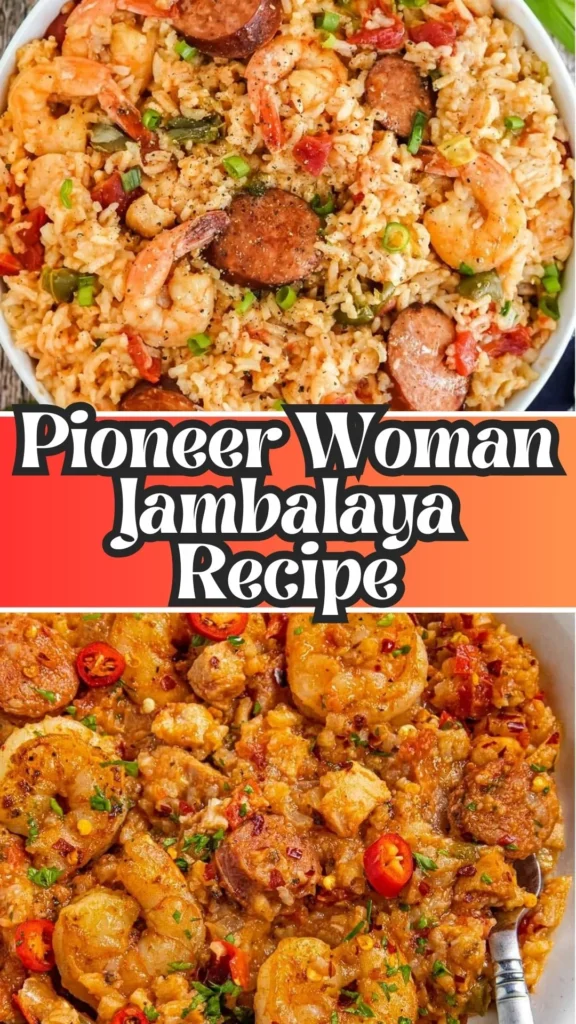
The Andouille sausage adds deep, savory richness while the chicken provides tender, juicy bites throughout. Sweet bell peppers and aromatic vegetables meld with crushed tomatoes to create a slightly tangy, robust sauce that coats each grain of rice.
The shrimp brings a delicate sweetness that balances the spice, while fresh herbs brighten everything up. It’s smoky, spicy, savory, and utterly satisfying-pure Cajun soul food comfort.
Pioneer Woman Jambalaya Ingredients and Kitchen Utensils
For the Homemade Cajun Seasoning:
- 3 tablespoons paprika
- 2 tablespoons kosher salt
- 2 tablespoons garlic powder
- 1 tablespoon onion powder
- 1 tablespoon dried oregano
- 1 tablespoon dried thyme
- 1 tablespoon cayenne pepper
- 1 tablespoon black pepper
The Jambalaya:
- 1 pound boneless skinless chicken breast or thighs, cut into bite-sized pieces
- 1 tablespoon Cajun seasoning (for chicken)
- 11 ounces Andouille sausage (or Spanish chorizo), sliced into rounds
- 2 tablespoons olive oil (plus 1 extra if needed)
- 2 ribs celery, chopped
- 2 bell peppers, chopped
- 1 large onion, chopped
- 4 garlic cloves, minced
- ½ teaspoon red pepper flakes
- 1 additional tablespoon Cajun seasoning (for vegetables)
- 1½ cups long-grain white rice, rinsed (white basmati recommended)
- 1 bay leaf
- 1 (15-ounce) can crushed tomatoes
- 3 cups low-sodium chicken broth
- 1 pound jumbo shrimp, peeled and deveined
- Chopped green onions, for garnish
- Chopped fresh parsley, for garnish
Essential Kitchen Utensils:
- Large Dutch oven or heavy-bottomed stock pot
- Mixing bowls (2-3 medium)
- Sharp chef’s knife
- Cutting board
- Wooden spoon or silicone spatula
- Measuring cups and spoons
- Airtight spice jar (for seasoning storage)
Preparation and Cooking Time
Prep Time: 20 minutes
Cook Time: 30 minutes
Total Time: 50 minutes
Servings: 6-8 servings
Pioneer Woman Jambalaya Recipe Instructions
Step 1: Make the Cajun Seasoning Blend
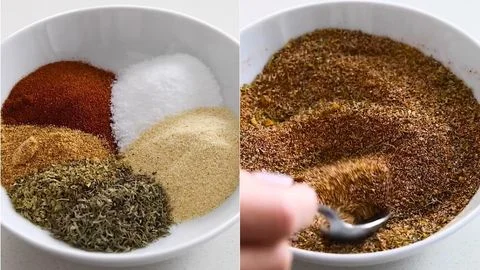
In a small bowl, combine 3 tablespoons paprika, 2 tablespoons kosher salt, 2 tablespoons garlic powder, 1 tablespoon onion powder, 1 tablespoon dried oregano, 1 tablespoon dried thyme, 1 tablespoon cayenne pepper, and 1 tablespoon black pepper. Mix thoroughly until all spices are well incorporated. Transfer to an airtight spice jar for storage (you’ll have extra for future jambalaya adventures).
Step 2: Prep Your Ingredients
Chop the 2 celery ribs, 2 bell peppers, and 1 large onion into uniform pieces. Place them together in a mixing bowl and set aside. Mince the 4 garlic cloves (or bash and peel them) and keep separate. Slice the 11 ounces Andouille sausage into bite-sized rounds, about ¼-inch thick.
Step 3: Season and Prepare the Chicken
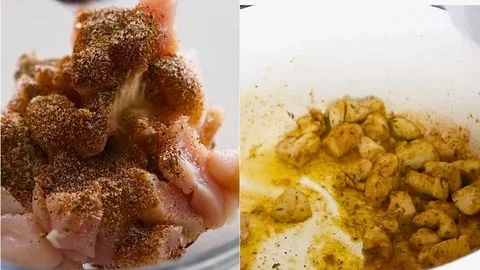
Cut 1 pound chicken breast or thighs into bite-sized pieces, roughly 1-inch cubes. Place in a bowl, sprinkle with 1 tablespoon of your homemade Cajun seasoning, and toss until each piece is evenly coated.
Step 4: Brown the Chicken
Heat 2 tablespoons olive oil in your large Dutch oven or stock pot over medium-high heat. Once the oil shimmers, add the seasoned chicken in a single layer. Sauté for 5-6 minutes, turning occasionally, until the chicken is lightly golden on all sides and cooked through. Remove to a clean plate.
Step 5: Cook the Sausage
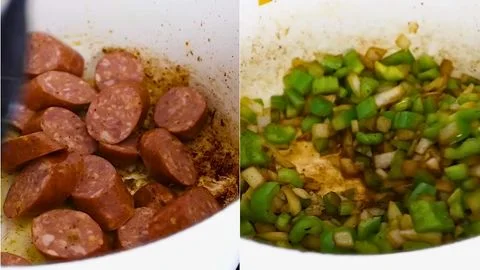
If your pot looks dry, add another tablespoon of olive oil. Add the sliced Andouille sausage in a single layer. Let it sear undisturbed for 2-3 minutes until nicely browned on one side, then flip and brown the other side for another 2 minutes. Since Andouille is pre-cooked, you’re just building flavor here. Remove to the same plate as the chicken.
Step 6: Sauté the Holy Trinity
Add the chopped celery, bell peppers, and onion to the pot (those browned bits on the bottom will naturally deglaze). Sauté for 4-5 minutes, stirring occasionally, until the vegetables soften and the onions become translucent.
Step 7: Build the Flavor Base
Stir in the minced garlic, ½ teaspoon red pepper flakes, and 1 tablespoon Cajun seasoning. Cook for about 30 seconds, stirring constantly, until wonderfully fragrant (don’t let the garlic burn).
Step 8: Toast the Rice
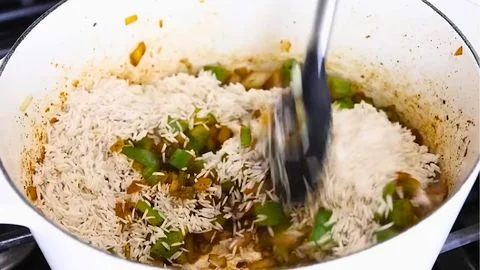
Add the 1½ cups rinsed long-grain white rice to the pot. Stir continuously for about 1 minute to coat every grain in the flavorful oil and spices.
Step 9: Add Liquids and Simmer
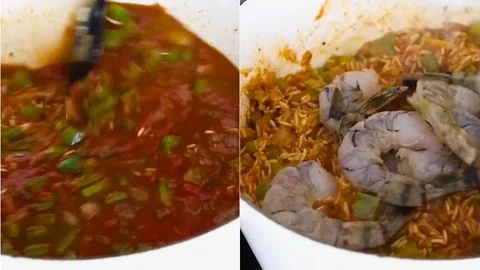
Toss in the bay leaf, then pour in the 15-ounce can of crushed tomatoes and 3 cups chicken broth. Stir everything well, scraping up any remaining browned bits from the bottom. Bring the mixture to a simmer, then reduce heat to low and cover with a tight-fitting lid. Cook for 7-8 minutes until the rice is just al dente (still slightly firm with a bit of soupy liquid remaining). Stir once or twice during cooking to prevent sticking, but avoid over-stirring which can make the rice mushy.
Step 10: Add Shrimp and Proteins
Remove and discard the bay leaf. Add the 1 pound raw shrimp, along with the cooked chicken and sausage back to the pot. Gently stir and nestle the shrimp into the rice mixture so they’re submerged.
Step 11: Final Steam
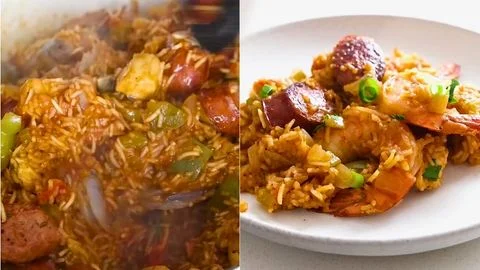
Turn off the heat completely, cover the pot, and let it sit undisturbed for 4-5 minutes. The residual heat will gently cook the shrimp (they’ll turn pink and opaque), warm the chicken and sausage through, and allow the rice to absorb any remaining liquid to perfect tenderness.
Step 12: Garnish and Serve
Give everything one final gentle stir. Garnish generously with chopped green onions and fresh parsley. Serve immediately in shallow bowls while piping hot.
Customization and Pairing Ideas for Serving
1. Spice Level Adjustments
This jambalaya with chicken and sausage can be tailored to any heat preference. For mild jambalaya, reduce the cayenne in the Cajun seasoning to 1 teaspoon and omit the red pepper flakes. For extra spicy, add a minced jalapeño or serrano pepper with the vegetables, or drizzle hot sauce at the table.
2. Protein Variations
While this authentic jambalaya recipe traditionally uses chicken, sausage, and shrimp (the classic “trinity of proteins”), you can customize based on what’s available. Try using duck instead of chicken for richer flavor, or substitute crawfish tails for the shrimp during crawfish season. For a simplified version, make it just sausage and shrimp, or even all-chicken jambalaya.
3. Sweet Southern Finish
Serve this Pioneer Woman Jambalaya Recipe with warm cornbread and finish with pioneer woman snickerdoodles for a comforting Southern-inspired menu that balances savory spice with soft cinnamon sweetness everyone loves.
4. Rice Alternatives
Though long-grain white rice is traditional, you can experiment with different varieties. Brown rice works but requires an additional 15-20 minutes cooking time and an extra cup of broth. Cauliflower rice creates a low-carb version (add it in the last 5 minutes). Parboiled rice yields firmer, more separated grains if you prefer that texture.
5. Vegetable Additions
Enhance your recipe for Pioneer Woman jambalaya with extra vegetables. Diced okra adds authentic Louisiana flair and helps thicken the mixture. Corn kernels bring sweetness, while diced zucchini or mushrooms add heartiness. Stir these in with the holy trinity for proper cooking time.
6. Hearty Comfort Combo
Pair your Pioneer Woman Jambalaya Recipe alongside pioneer woman hoppin john to create a protein-rich, soul-food feast. The beans, rice, and smoky flavors complement Cajun spices for satisfying family dinners.
7. Classic Side Pairings:
Serve your jambalaya alongside traditional Southern sides that complement without competing. Buttery cornbread or corn muffins are perfect for soaking up the flavorful sauce. A crisp green salad with tangy vinaigrette cuts through the richness. Creamy coleslaw provides cooling contrast to the spice.
8. Beverage Pairings
This bold dish pairs beautifully with drinks that can stand up to its intensity. Ice-cold beer (particularly lagers or amber ales) is classic. For wine lovers, try a slightly chilled Beaujolais or Grenache. Sweet tea is the traditional Southern non-alcoholic choice, while sparkling water with lemon cleanses the palate between bites.
9. Fresh Dessert Balance
After enjoying Pioneer Woman Jambalaya Recipe, lighten the meal with pioneer woman ambrosia salad. Its creamy fruit sweetness refreshes the palate, adding a cool contrast that completes spicy main-course flavors.
7. Party Presentation
Transform this jambalaya recipe easy into a crowd-pleasing party centerpiece by serving it straight from a colorful cast-iron pot. Set up a toppings bar with sliced green onions, chopped parsley, hot sauce varieties, lemon wedges, and extra Cajun seasoning so guests can customize their bowls. Serve with a crusty French bread basket for an impressive, interactive dining experience.
Essential Tips for Perfect Jambalaya
1. Don’t Skip Rinsing the Rice
Rinsing your long-grain rice under cold water until the water runs clear removes excess starch that can make your jambalaya gummy instead of fluffy. This simple step ensures each grain stays separate and properly textured-crucial for authentic results in this chicken and sausage jambalaya recipe.
2. Layer Your Proteins Properly
The cooking sequence matters tremendously. Browning the chicken first develops flavor through the Maillard reaction, then the sausage adds its smoky fat to the pot. Adding raw shrimp at the very end with residual heat prevents them from becoming rubbery. This technique ensures each protein is perfectly cooked without overcooking any component.
3. Resist Over-Stirring
While it’s tempting to constantly stir your jambalaya, excessive stirring releases too much starch from the rice, creating a mushy, sticky texture. Once you’ve added the liquids and covered the pot, stir only once or twice during cooking. This restraint is what separates amateur jambalaya from restaurant-quality results.
4. Use Quality Andouille Sausage
Authentic Andouille sausage is the flavor backbone of this dish. It’s a smoked pork sausage with Cajun spicing that’s fundamentally different from regular smoked sausage. If you can’t find true Andouille, Spanish chorizo is the best substitute (not Mexican chorizo, which is raw and completely different). The smokiness and spice level of your sausage will dramatically impact the final dish.
5. Master the Liquid Ratio
The rice-to-liquid ratio is critical in this jambalaya recipe easy to execute but tricky to perfect. Start with 2:1 liquid to rice (3 cups broth to 1½ cups rice), but keep an extra ½ cup broth handy. Different rice varieties absorb liquid differently-basmati absorbs less than parboiled, while brown rice needs significantly more. If your rice isn’t tender after the resting period, add a splash more broth, cover, and let it steam for another few minutes.
6. Prep Everything Before You Start
Jambalaya moves quickly once you start cooking. Have your vegetables chopped, proteins cut and seasoned, and liquids measured before you heat the pot. This mise en place approach prevents burning garlic while you’re scrambling to chop peppers, and ensures each ingredient gets added at precisely the right moment for optimal flavor development.
7. The Resting Period is Non-Negotiable
When the recipe instructs you to turn off the heat and let the pot sit covered for 4-5 minutes, this isn’t optional. This resting time allows the shrimp to cook gently in residual heat (preventing that tough, overcooked texture), lets the flavors meld beautifully, and gives the rice those final minutes to absorb any remaining liquid and achieve perfect tenderness. Patience during this final step transforms good jambalaya into exceptional jambalaya.
Storage and Reheating Guidance
Store leftover jambalaya in an airtight container in the refrigerator for up to 3-4 days. Reheat gently on the stovetop over medium-low heat with a splash of chicken broth to restore moisture, stirring occasionally until heated through (about 5-7 minutes). Alternatively, microwave individual portions in 1-minute intervals, stirring between, until steaming hot.
Pioneer Woman Jambalaya Recipe
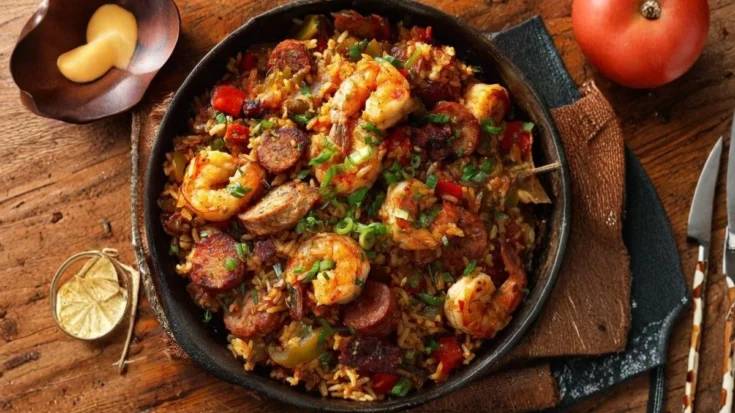
There’s something magical about a steaming pot of authentic jambalaya that brings everyone to the table. This copycat Pioneer Woman jambalaya recipe delivers all the bold, soulful flavors of Louisiana’s beloved one-pot wonder right in your own kitchen. Packed with tender chicken, smoky Andouille sausage, plump shrimp, and perfectly seasoned rice swimming in a rich tomato-kissed broth, this jambalaya recipe easy enough for weeknight dinners yet impressive enough for entertaining.
Ingredients
- 3 tablespoons paprika
- 2 tablespoons kosher salt
- 2 tablespoons garlic powder
- 1 tablespoon onion powder
- 1 tablespoon dried oregano
- 1 tablespoon dried thyme
- 1 tablespoon cayenne pepper
- 1 tablespoon black pepper
- 1 pound boneless skinless chicken breast or thighs, cut into bite-sized pieces
- 1 tablespoon Cajun seasoning (for chicken)
- 11 ounces Andouille sausage (or Spanish chorizo), sliced into rounds
- 2 tablespoons olive oil (plus 1 extra if needed)
- 2 ribs celery, chopped
- 2 bell peppers, chopped
- 1 large onion, chopped
- 4 garlic cloves, minced
- ½ teaspoon red pepper flakes
- 1 additional tablespoon Cajun seasoning (for vegetables)
- 1½ cups long-grain white rice, rinsed (white basmati recommended)
- 1 bay leaf
- 1 (15-ounce) can crushed tomatoes
- 3 cups low-sodium chicken broth
- 1 pound jumbo shrimp, peeled and deveined
- Chopped green onions, for garnish
- Chopped fresh parsley, for garnish
Instructions
Step 1: Make the Cajun Seasoning Blend
In a small bowl, combine 3 tablespoons paprika, 2 tablespoons kosher salt, 2 tablespoons garlic powder, 1 tablespoon onion powder, 1 tablespoon dried oregano, 1 tablespoon dried thyme, 1 tablespoon cayenne pepper, and 1 tablespoon black pepper. Mix thoroughly until all spices are well incorporated. Transfer to an airtight spice jar for storage (you’ll have extra for future jambalaya adventures).
Step 2: Prep Your Ingredients
Chop the 2 celery ribs, 2 bell peppers, and 1 large onion into uniform pieces. Place them together in a mixing bowl and set aside. Mince the 4 garlic cloves (or bash and peel them) and keep separate. Slice the 11 ounces Andouille sausage into bite-sized rounds, about ¼-inch thick.
Step 3: Season and Prepare the Chicken
Cut 1 pound chicken breast or thighs into bite-sized pieces, roughly 1-inch cubes. Place in a bowl, sprinkle with 1 tablespoon of your homemade Cajun seasoning, and toss until each piece is evenly coated.
Step 4: Brown the Chicken
Heat 2 tablespoons olive oil in your large Dutch oven or stock pot over medium-high heat. Once the oil shimmers, add the seasoned chicken in a single layer. Sauté for 5-6 minutes, turning occasionally, until the chicken is lightly golden on all sides and cooked through. Remove to a clean plate.
Step 5: Cook the Sausage
If your pot looks dry, add another tablespoon of olive oil. Add the sliced Andouille sausage in a single layer. Let it sear undisturbed for 2-3 minutes until nicely browned on one side, then flip and brown the other side for another 2 minutes. Since Andouille is pre-cooked, you’re just building flavor here. Remove to the same plate as the chicken.
Step 6: Sauté the Holy Trinity
Add the chopped celery, bell peppers, and onion to the pot (those browned bits on the bottom will naturally deglaze). Sauté for 4-5 minutes, stirring occasionally, until the vegetables soften and the onions become translucent.
Step 7: Build the Flavor Base
Stir in the minced garlic, ½ teaspoon red pepper flakes, and 1 tablespoon Cajun seasoning. Cook for about 30 seconds, stirring constantly, until wonderfully fragrant (don’t let the garlic burn).
Step 8: Toast the Rice
Add the 1½ cups rinsed long-grain white rice to the pot. Stir continuously for about 1 minute to coat every grain in the flavorful oil and spices.
Step 9: Add Liquids and Simmer
Toss in the bay leaf, then pour in the 15-ounce can of crushed tomatoes and 3 cups chicken broth. Stir everything well, scraping up any remaining browned bits from the bottom. Bring the mixture to a simmer, then reduce heat to low and cover with a tight-fitting lid. Cook for 7-8 minutes until the rice is just al dente (still slightly firm with a bit of soupy liquid remaining). Stir once or twice during cooking to prevent sticking, but avoid over-stirring which can make the rice mushy.
Step 10: Add Shrimp and Proteins
Remove and discard the bay leaf. Add the 1 pound raw shrimp, along with the cooked chicken and sausage back to the pot. Gently stir and nestle the shrimp into the rice mixture so they’re submerged.
Step 11: Final Steam
Turn off the heat completely, cover the pot, and let it sit undisturbed for 4-5 minutes. The residual heat will gently cook the shrimp (they’ll turn pink and opaque), warm the chicken and sausage through, and allow the rice to absorb any remaining liquid to perfect tenderness.
Step 12: Garnish and Serve
Give everything one final gentle stir. Garnish generously with chopped green onions and fresh parsley. Serve immediately in shallow bowls while piping hot.
Notes
Store leftover jambalaya in an airtight container in the refrigerator for up to 3-4 days. Reheat gently on the stovetop over medium-low heat with a splash of chicken broth to restore moisture, stirring occasionally until heated through (about 5-7 minutes). Alternatively, microwave individual portions in 1-minute intervals, stirring between, until steaming hot.
Nutrition Information:
Yield:
6Serving Size:
1Amount Per Serving: Calories: 210
Common Queries and FAQs
Here, we’ve got you covered with some common questions about the Pioneer Woman Jambalaya Recipe that people often ask.
What’s the difference between jambalaya and gumbo?
Jambalaya is a rice-based one-pot dish where rice cooks directly in the seasoned broth with proteins and vegetables, resulting in a drier, pilaf-style consistency. Gumbo is a soup or stew served over rice cooked separately, featuring a roux-thickened broth and often okra. Jambalaya has Spanish influences while gumbo is more African-French in origin.
Can I make this jambalaya in a slow cooker or Instant Pot?
Yes! For the Instant Pot, follow steps 4-7 using the sauté function, then add rice, tomatoes, and broth. Pressure cook on high for 5 minutes with natural release for 5 minutes. Stir in raw shrimp and cooked proteins, let sit 5 minutes. For slow cooker, brown proteins and sauté vegetables first, then transfer everything except shrimp to the slow cooker with rice and liquids. Cook on low 2-3 hours, add shrimp in the last 15 minutes.
Why is my jambalaya mushy or too wet?
Mushy jambalaya typically results from over-stirring the rice (which releases excess starch), using too much liquid, or cooking too long. The rice should be just al dente after the initial simmer, as it continues cooking during the resting period. If it’s too wet, remove the lid and cook uncovered on low heat for a few minutes to evaporate excess moisture, stirring gently.
Can I use chicken thighs instead of chicken breast?
Absolutely! Chicken thighs actually work wonderfully in jambalaya because they’re more forgiving and stay juicier during cooking. They have more fat and connective tissue, which means they’re harder to overcook and add richer flavor to the dish. Just trim excess fat and cut into similar-sized pieces as you would with breast meat.
What can I substitute for Andouille sausage?
Spanish chorizo is the best substitute as it provides similar smokiness and spice. Kielbasa works in a pinch but adds more and has less spice, so increase your Cajun seasoning slightly. Hot Italian sausage can work but changes the flavor profile. Avoid Mexican chorizo (it’s raw and crumbly) and breakfast sausage (too mild and sweet).
How do I make this jambalaya less spicy for kids?
Reduce the cayenne pepper in the Cajun seasoning to ½ teaspoon and omit the red pepper flakes entirely. Use mild or sweet Italian sausage instead of Andouille. You can also serve hot sauce on the side so adults can add heat to their individual portions. The tomatoes and bell peppers provide plenty of flavor even without intense heat.
Can I freeze jambalaya?
Jambalaya freezes reasonably well for up to 2-3 months, though the shrimp texture may suffer slightly upon reheating. Cool completely, portion into freezer-safe containers, and freeze. Thaw overnight in the refrigerator, then reheat gently on the stovetop with added broth. For best results, consider freezing before adding the shrimp, then add fresh shrimp when reheating.
What type of rice works best for jambalaya?
Long-grain white rice is traditional and recommended-specifically basmati or jasmine for their aromatic qualities and ability to stay fluffy. Parboiled (converted) rice like Uncle Ben’s creates firmer, more separated grains but requires slightly more liquid. Avoid short-grain rice (too sticky), instant rice (too mushy), or arborio (too starchy). Medium-grain works but won’t be as authentic.
Do I have to use fresh shrimp or can I use frozen?
Frozen shrimp work perfectly fine! In fact, most “fresh” shrimp at grocery stores were previously frozen anyway. Just make sure to thaw completely in the refrigerator overnight or under cold running water, then pat dry before adding to the jambalaya. Frozen shrimp are often flash-frozen on the boat, preserving quality and freshness.
Why is my jambalaya bland?
Bland jambalaya usually means underseasoning. This recipe uses seasoning at multiple stages-on the chicken, with the vegetables, and the overall broth. Don’t skip any seasoning step. Use low-sodium broth so you control salt levels. Taste and adjust before the final resting period. The homemade Cajun blend is more potent than store-bought; if using store-bought, you may need to increase the amount.
What’s the best pot for making jambalaya?
A large Dutch oven (5-6 quarts minimum) is ideal because it distributes heat evenly, retains temperature well, and moves easily from stovetop to oven if needed. Cast iron works beautifully but requires more attention to prevent sticking. A heavy-bottomed stock pot also works. Avoid thin pots that create hot spots and burn the bottom layer of rice.
Can I make jambalaya ahead of time?
Yes, though it’s best fresh. You can prep all ingredients (chop vegetables, make seasoning blend, cut proteins) the day before. You can also make it completely 1-2 days ahead and gently reheat. The flavors actually deepen overnight. Just note that the rice may absorb more liquid during storage, so add extra broth when reheating to restore the proper consistency.
This copycat Pioneer Woman jambalaya recipe brings Louisiana’s soul-satisfying flavors straight to your table with minimal fuss and maximum taste. The combination of homemade Cajun seasoning, the holy trinity of vegetables, and perfectly cooked proteins creates a one-pot wonder that’s destined to become a family favorite.
Whether you’re feeding a hungry crowd or prepping meals for the week ahead, this authentic jambalaya recipe delivers restaurant-quality results every single time. So grab your Dutch oven, gather your ingredients, and get ready to experience why jambalaya has been beloved for generations!
You can also follow us on Pinterest, and YouTube for more delicious updates and kitchen inspiration. Your feedback and support mean the world to us!