
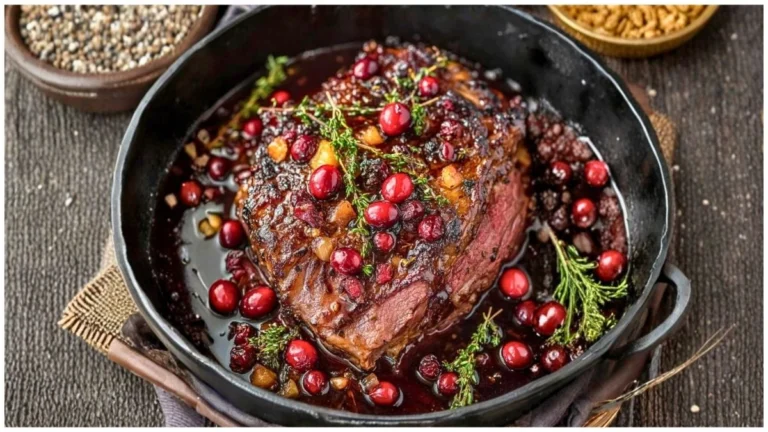

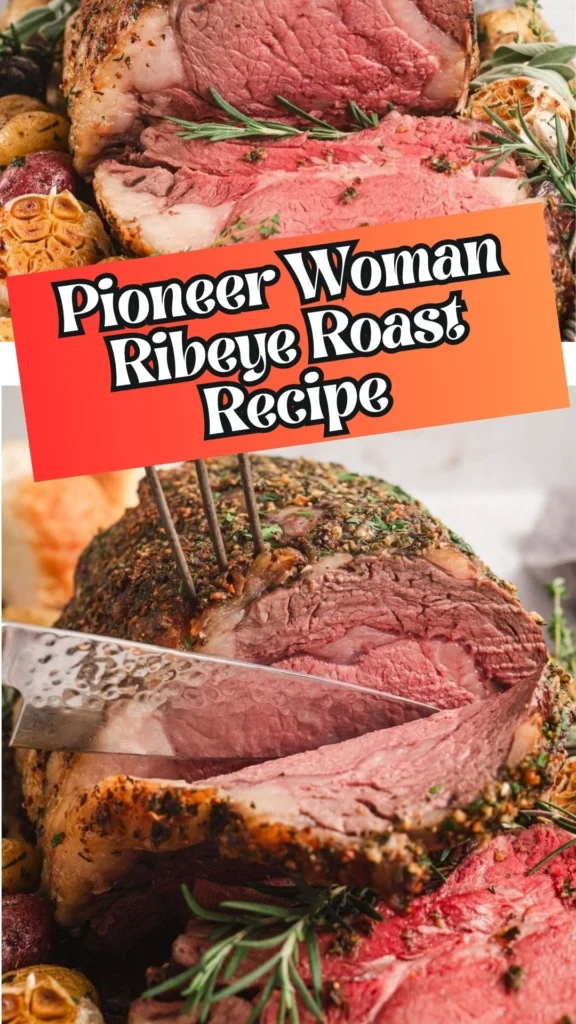
There’s nothing quite like a perfectly roasted ribeye roast to transform any gathering into an unforgettable celebration. This copycat Pioneer Woman ribeye roast recipe delivers restaurant-quality results right in your home kitchen.
With a golden herb-crusted exterior, tender pink center, and melt-in-your-mouth marbling, this easy prime rib or rib eye roast proves that impressive doesn’t have to mean complicated.
Whether you’re preparing your first prime rib dinner or you’re a seasoned home cook, this foolproof method ensures a showstopping centerpiece every single time.
What Does Pioneer Woman Ribeye Roast Taste Like?
This beef ribeye roast recipe offers an incredibly rich, beefy flavor enhanced by aromatic herbs and garlic.
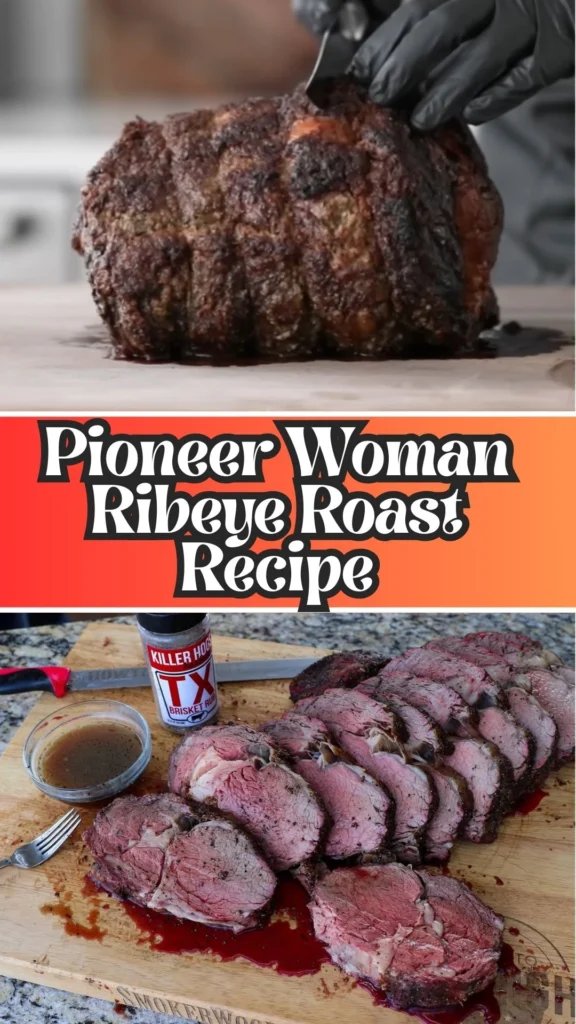
The herb compound butter creates a savory, golden crust that’s beautifully seasoned with fresh thyme, rosemary, and shallots. Each slice reveals tender, juicy meat with luxurious marbling that practically melts on your tongue.
The accompanying horseradish sauce adds a creamy, tangy kick that cuts through the richness perfectly. When you cook prime rib using this method, you’ll experience that ideal contrast between the crispy, well-seasoned exterior and the buttery-soft, pink interior that makes prime rib roast the king of special occasion meals.
Pioneer Woman Ribeye Roast Recipe Ingredients and Kitchen Utensils
For the Herb Compound Butter:
- Fresh thyme sprigs (leaves removed from stems; substitute with dried thyme if needed)
- Fresh rosemary sprigs (leaves removed from stems; substitute with dried rosemary if needed)
- 4-6 garlic cloves (adjust to taste)
- 1 whole shallot, peeled
- Olive oil (a small amount to help process)
- 8 oz (2 sticks) unsalted butter, softened and cut into chunks
- Sea salt, to taste
- Fresh cracked black pepper, to taste
For the Prime Rib:
- 1 bone-in standing rib eye roast (10 lb, 4-bone; scale as needed)
- Kosher salt or sea salt, generously
- Fresh cracked black pepper, generously
- Butcher’s twine (for trussing)
For the Horseradish Sauce:
- 1 cup crème fraîche (or substitute with sour cream)
- 1/4 cup mayonnaise
- 2-3 tbsp prepared horseradish (raw, from refrigerated section)
- 1 tsp stone ground mustard or Dijon mustard
- 1 tsp Worcestershire sauce
- 1 tsp vinegar (to cut heat)
- Salt, to taste
- Black pepper, to taste
For the Roasted Potatoes (Optional Side):
- 2 lb baby assorted colored potatoes (or fingerling potatoes)
- Olive oil (enough to coat)
- Salt, to taste
- Black pepper, to taste
Kitchen Utensils Needed:
- Food processor (or stand mixer)
- Sharp boning knife
- Large roasting pan
- Butcher’s twine
- Meat thermometer
- Rubber spatula
- Cutting board
- Mixing bowl
- Whisk
- Aluminum foil
Preparation and Cooking Time
Prep Time: 30 minutes (includes frenching bones and making compound butter)
Cook Time: 2 hours (30 minutes at 450°F + 90 minutes at 325°F)
Resting Time: 15 minutes
Total Time: 2 hours 45 minutes
Servings: 8-10 people
Pioneer Woman Ribeye Roast Recipe Instructions
Step 1: Prepare the Herb Compound Butter
Remove the leaves from the fresh thyme and rosemary sprigs, discarding the stems. Add the herb leaves, garlic cloves, and peeled shallot to a food processor. Pulse the mixture to finely mince everything.
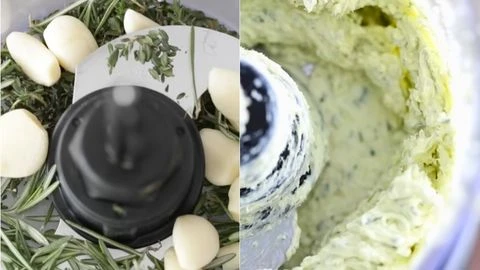
Slowly drizzle in a small amount of olive oil while pulsing to help the ingredients combine. Add chunks of softened butter and pulse until smooth. Season with sea salt and fresh cracked black pepper, then pulse again to incorporate. Set aside at room temperature.
Step 2: French the Bones (Optional)
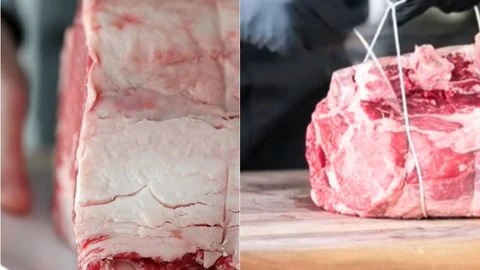
Place your rib eye roast on a cutting board. Using a sharp boning knife, trim meat from the top of each bone, exposing them fully. Cut between bones to remove thin layers of meat and skin (save scraps for stock). Scrape bones clean this presentation step takes 10-15 minutes but creates an elegant look.
Step 3: Truss the Roast
Tie butcher’s twine around the roast with a double knot, spacing ties between each bone. This differs from tenderloin trussing due to the bones. Secure with firm knots and trim excess twine to help the roast maintain its shape during cooking prime rib.
Step 4: Season Generously
Place the roast in a large roasting pan. Generously season all sides with kosher salt and pepper, packing it in with your hands for even coverage. This is crucial for developing that flavorful crust when you cook prime rib.
Step 5: Apply Herb Butter
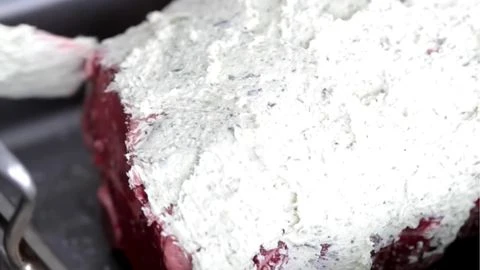
Spread the herb compound butter generously over the top (cap) of the prime rib roast using a rubber spatula or your hands. This creates that signature golden, aromatic crust.
Step 6: Start Roasting
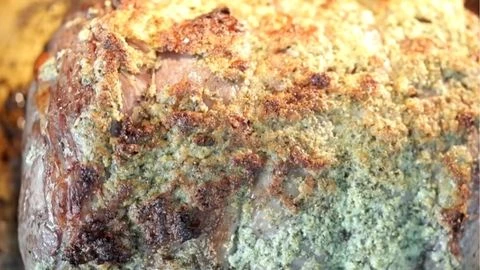
Preheat your oven to 450°F. Roast at this high temperature for 30 minutes to start browning and develop a beautiful crust on your boneless ribeye roast recipe (or bone-in version).
Step 7: Reduce and Continue Cooking
Reduce oven temperature to 325°F and continue roasting for about 90 minutes (or 12-14 minutes per pound). Use a meat thermometer to monitor you’re targeting 110°F internal temperature for medium-rare. This is the most critical step in the best ribeye roast recipe.
Step 8: Add Potatoes (Optional)
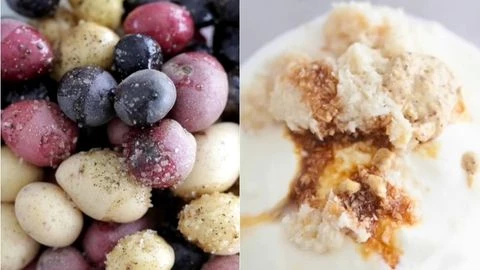
After about 45 minutes at 325°F, toss baby potatoes in olive oil, salt, and pepper. Arrange them around the roast in the pan and roast for the remaining 45 minutes until tender and golden.
Step 9: Make Horseradish Sauce
While the roast cooks, combine crème fraîche, mayonnaise, prepared horseradish, mustard, Worcestershire sauce, and vinegar in a bowl. Season with salt and pepper, then whisk until smooth. Set aside at room temperature.
Step 10: Rest and Serve
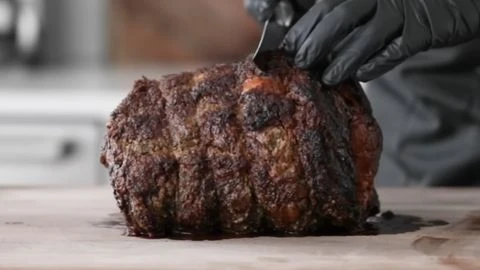
Remove the roast from the oven and tent with foil. Rest for 10-15 minutes the internal temperature will rise to 125-130°F. Don’t slice while steaming hot. Let it breathe 1-2 more minutes after slicing for juices to redistribute. Transfer to a cutting board, slice into portions, and serve with roasted potatoes and horseradish sauce.
Customization and Pairing Ideas for Serving
1. Classic Steakhouse Style: Serve your pioneer woman prime rib alongside creamed spinach, loaded baked potatoes, and sautéed mushrooms. Add a wedge salad with blue cheese dressing to complete the traditional steakhouse experience that pairs perfectly with this ribeye roast recipe.
2. Holiday Feast Elevation: Transform this into a complete Christmas or Easter dinner by pairing with roasted Brussels sprouts with bacon, honey-glazed carrots, and Yorkshire pudding. The Yorkshire pudding soaks up those beautiful pan drippings from cooking prime rib beautifully.
3. Wine Country Pairing: Complement the rich flavors with a full-bodied Cabernet Sauvignon or Merlot. For sides, try garlic mashed potatoes, green beans almondine, and a fresh arugula salad with shaved parmesan.
4. Herb Variation: Customize your compound butter by adding fresh sage or oregano alongside the rosemary and thyme. You can also incorporate lemon zest for brightness or swap shallots for caramelized onions in this best ribeye roast recipe.
5. Crispy Steak Balance: Serve Pioneer Woman ribeye roast with pioneer woman smashed potato placed at the center, adding crispy texture and buttery richness that complements juicy beef for a balanced, steakhouse-style dinner experience.
6. Sauce Alternatives: While horseradish sauce is traditional, try serving with au jus made from the pan drippings, chimichurri for a fresh herbaceous kick, or a red wine reduction for sophisticated flavor when you cook prime rib.
7. International Twist: Give your prime rib dinner an Italian flair by seasoning with Italian herbs and serving with risotto and roasted tomatoes. Or go French with herbes de Provence in the butter and serve alongside ratatouille.
8. Fresh Grain Contrast: Pair Pioneer Woman ribeye roast alongside Greek Orzo Salad set midway on the table, delivering fresh herbs, light grains, and bright flavors that cut richness and refresh the palate beautifully.
9. Leftover Reinvention: Transform leftover slices into French dip sandwiches, prime rib hash with eggs for brunch, beef stroganoff, or slice thinly for luxurious salad toppers. The possibilities make this beef ribeye roast recipe even more valuable.
Essential Tips for Perfect Ribeye Roast
1. Choose Quality Meat: Invest in USDA Prime or Choice grade for the best ribeye roast recipe results. Look for generous marbling throughout those white fat streaks create tenderness and flavor. Ask your butcher for a 4-bone roast (feeds 8-10) and request they leave the bones intact for more flavor.
2. Bring to Room Temperature: This is crucial when cooking prime rib. Remove your roast from the refrigerator 2-3 hours before roasting. Cold meat cooks unevenly, resulting in an overcooked exterior and raw center. Room temperature meat roasts uniformly and reaches that perfect medium-rare throughout.
3. Invest in a Reliable Meat Thermometer: Don’t guess with such an expensive cut. Insert an instant-read thermometer into the thickest part of the meat, away from bone. For this pioneer woman ribeye roast recipe, aim for 110°F before resting (it’ll climb to 125-130°F). Remember: you can always cook it more, but you can’t undo overdone meat.
4. The Reverse Sear Method Alternative: While this recipe uses high-heat-first, you can reverse it for even more control. Start at 225°F until internal temp hits 110°F, then blast at 500°F for 10 minutes to create the crust. This method offers more forgiveness in this ribeye roast recipe.
5. Don’t Skip the Resting Period: Resting is non-negotiable for the best ribeye roast recipe. Those 15 minutes allow juices to redistribute throughout the meat instead of flooding onto your cutting board. Tent loosely with foil tight wrapping steams the crust you worked hard to create.
6. Bone Placement Matters: When cooking prime rib bone-in, place the roast bone-side-down. The bones act as a natural roasting rack, protecting the bottom from direct heat while adding flavor. Save those frenched bones for making rich beef stock afterward.
7. Season Aggressively: Don’t be shy with salt and pepper on this large roast. The surface area is substantial, and under-seasoning is a common mistake. Pack that seasoning on generously most will form the delicious crust rather than making the meat too salty. This transforms a good prime rib roast into an extraordinary one.
Storage and Reheating Guidance
Store leftover rib eye roast wrapped tightly in aluminum foil or in an airtight container in the refrigerator for up to 4 days. Reheat gently in a 250°F oven until warmed through (about 20 minutes), or enjoy sliced cold in sandwiches to preserve that perfect medium-rare doneness you achieved.
Pioneer Woman Ribeye Roast Recipe
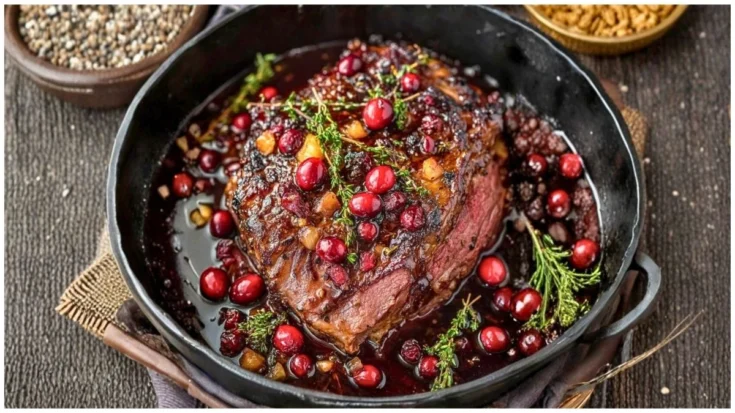
There’s nothing quite like a perfectly roasted ribeye roast to transform any gathering into an unforgettable celebration. This copycat Pioneer Woman ribeye roast recipe delivers restaurant-quality results right in your home kitchen.
Ingredients
- Fresh thyme sprigs (leaves removed from stems; substitute with dried thyme if needed)
- Fresh rosemary sprigs (leaves removed from stems; substitute with dried rosemary if needed)
- 4-6 garlic cloves (adjust to taste)
- 1 whole shallot, peeled
- Olive oil (a small amount to help process)
- 8 oz (2 sticks) unsalted butter, softened and cut into chunks
- Sea salt, to taste
- Fresh cracked black pepper, to taste
- 1 bone-in standing rib eye roast (10 lb, 4-bone; scale as needed)
- Kosher salt or sea salt, generously
- Fresh cracked black pepper, generously
- Butcher’s twine (for trussing)
- 1 cup crème fraîche (or substitute with sour cream)
- 1/4 cup mayonnaise
- 2-3 tbsp prepared horseradish (raw, from refrigerated section)
- 1 tsp stone ground mustard or Dijon mustard
- 1 tsp Worcestershire sauce
- 1 tsp vinegar (to cut heat)
- Salt, to taste
- Black pepper, to taste
- 2 lb baby assorted colored potatoes (or fingerling potatoes)
- Olive oil (enough to coat)
- Salt, to taste
- Black pepper, to taste
Instructions
Step 1: Prepare the Herb Compound Butter
Remove the leaves from the fresh thyme and rosemary sprigs, discarding the stems. Add the herb leaves, garlic cloves, and peeled shallot to a food processor. Pulse the mixture to finely mince everything. Slowly drizzle in a small amount of olive oil while pulsing to help the ingredients combine. Add chunks of softened butter and pulse until smooth. Season with sea salt and fresh cracked black pepper, then pulse again to incorporate. Set aside at room temperature.
Step 2: French the Bones (Optional)
Place your rib eye roast on a cutting board. Using a sharp boning knife, trim meat from the top of each bone, exposing them fully. Cut between bones to remove thin layers of meat and skin (save scraps for stock). Scrape bones clean this presentation step takes 10-15 minutes but creates an elegant look.
Step 3: Truss the Roast
Tie butcher’s twine around the roast with a double knot, spacing ties between each bone. This differs from tenderloin trussing due to the bones. Secure with firm knots and trim excess twine to help the roast maintain its shape during cooking prime rib.
Step 4: Season Generously
Place the roast in a large roasting pan. Generously season all sides with kosher salt and pepper, packing it in with your hands for even coverage. This is crucial for developing that flavorful crust when you cook prime rib.
Step 5: Apply Herb Butter
Spread the herb compound butter generously over the top (cap) of the prime rib roast using a rubber spatula or your hands. This creates that signature golden, aromatic crust.
Step 6: Start Roasting
Preheat your oven to 450°F. Roast at this high temperature for 30 minutes to start browning and develop a beautiful crust on your boneless ribeye roast recipe (or bone-in version).
Step 7: Reduce and Continue Cooking
Reduce oven temperature to 325°F and continue roasting for about 90 minutes (or 12-14 minutes per pound). Use a meat thermometer to monitor you’re targeting 110°F internal temperature for medium-rare. This is the most critical step in the best ribeye roast recipe.
Step 8: Add Potatoes (Optional)
After about 45 minutes at 325°F, toss baby potatoes in olive oil, salt, and pepper. Arrange them around the roast in the pan and roast for the remaining 45 minutes until tender and golden.
Step 9: Make Horseradish Sauce
While the roast cooks, combine crème fraîche, mayonnaise, prepared horseradish, mustard, Worcestershire sauce, and vinegar in a bowl. Season with salt and pepper, then whisk until smooth. Set aside at room temperature.
Step 10: Rest and Serve
Remove the roast from the oven and tent with foil. Rest for 10-15 minutes the internal temperature will rise to 125-130°F. Don’t slice while steaming hot. Let it breathe 1-2 more minutes after slicing for juices to redistribute. Transfer to a cutting board, slice into portions, and serve with roasted potatoes and horseradish sauce.
Notes
Store leftover rib eye roast wrapped tightly in aluminum foil or in an airtight container in the refrigerator for up to 4 days. Reheat gently in a 250°F oven until warmed through (about 20 minutes), or enjoy sliced cold in sandwiches to preserve that perfect medium-rare doneness you achieved.
Nutrition Information:
Yield:
6Serving Size:
1Amount Per Serving: Calories: 280
Pioneer Woman Ribeye Roast Recipe
There’s nothing quite like a perfectly roasted ribeye roast to transform any gathering into an unforgettable celebration. This copycat Pioneer Woman ribeye roast recipe delivers restaurant-quality results right in your home kitchen.
Ingredients
- Fresh thyme sprigs (leaves removed from stems; substitute with dried thyme if needed)
- Fresh rosemary sprigs (leaves removed from stems; substitute with dried rosemary if needed)
- 4-6 garlic cloves (adjust to taste)
- 1 whole shallot, peeled
- Olive oil (a small amount to help process)
- 8 oz (2 sticks) unsalted butter, softened and cut into chunks
- Sea salt, to taste
- Fresh cracked black pepper, to taste
- 1 bone-in standing rib eye roast (10 lb, 4-bone; scale as needed)
- Kosher salt or sea salt, generously
- Fresh cracked black pepper, generously
- Butcher’s twine (for trussing)
- 1 cup crème fraîche (or substitute with sour cream)
- 1/4 cup mayonnaise
- 2-3 tbsp prepared horseradish (raw, from refrigerated section)
- 1 tsp stone ground mustard or Dijon mustard
- 1 tsp Worcestershire sauce
- 1 tsp vinegar (to cut heat)
- Salt, to taste
- Black pepper, to taste
- 2 lb baby assorted colored potatoes (or fingerling potatoes)
- Olive oil (enough to coat)
- Salt, to taste
- Black pepper, to taste
Instructions
Step 1: Prepare the Herb Compound Butter
Remove the leaves from the fresh thyme and rosemary sprigs, discarding the stems. Add the herb leaves, garlic cloves, and peeled shallot to a food processor. Pulse the mixture to finely mince everything. Slowly drizzle in a small amount of olive oil while pulsing to help the ingredients combine. Add chunks of softened butter and pulse until smooth. Season with sea salt and fresh cracked black pepper, then pulse again to incorporate. Set aside at room temperature.
Step 2: French the Bones (Optional)
Place your rib eye roast on a cutting board. Using a sharp boning knife, trim meat from the top of each bone, exposing them fully. Cut between bones to remove thin layers of meat and skin (save scraps for stock). Scrape bones clean this presentation step takes 10-15 minutes but creates an elegant look.
Step 3: Truss the Roast
Tie butcher’s twine around the roast with a double knot, spacing ties between each bone. This differs from tenderloin trussing due to the bones. Secure with firm knots and trim excess twine to help the roast maintain its shape during cooking prime rib.
Step 4: Season Generously
Place the roast in a large roasting pan. Generously season all sides with kosher salt and pepper, packing it in with your hands for even coverage. This is crucial for developing that flavorful crust when you cook prime rib.
Step 5: Apply Herb Butter
Spread the herb compound butter generously over the top (cap) of the prime rib roast using a rubber spatula or your hands. This creates that signature golden, aromatic crust.
Step 6: Start Roasting
Preheat your oven to 450°F. Roast at this high temperature for 30 minutes to start browning and develop a beautiful crust on your boneless ribeye roast recipe (or bone-in version).
Step 7: Reduce and Continue Cooking
Reduce oven temperature to 325°F and continue roasting for about 90 minutes (or 12-14 minutes per pound). Use a meat thermometer to monitor you’re targeting 110°F internal temperature for medium-rare. This is the most critical step in the best ribeye roast recipe.
Step 8: Add Potatoes (Optional)
After about 45 minutes at 325°F, toss baby potatoes in olive oil, salt, and pepper. Arrange them around the roast in the pan and roast for the remaining 45 minutes until tender and golden.
Step 9: Make Horseradish Sauce
While the roast cooks, combine crème fraîche, mayonnaise, prepared horseradish, mustard, Worcestershire sauce, and vinegar in a bowl. Season with salt and pepper, then whisk until smooth. Set aside at room temperature.
Step 10: Rest and Serve
Remove the roast from the oven and tent with foil. Rest for 10-15 minutes the internal temperature will rise to 125-130°F. Don’t slice while steaming hot. Let it breathe 1-2 more minutes after slicing for juices to redistribute. Transfer to a cutting board, slice into portions, and serve with roasted potatoes and horseradish sauce.
Notes
Store leftover rib eye roast wrapped tightly in aluminum foil or in an airtight container in the refrigerator for up to 4 days. Reheat gently in a 250°F oven until warmed through (about 20 minutes), or enjoy sliced cold in sandwiches to preserve that perfect medium-rare doneness you achieved.
Nutrition Information:
Yield:
6Serving Size:
1Amount Per Serving: Calories: 280
Common Queries and FAQs
Here, we’ve got you covered with some common questions about the Pioneer Woman Ribeye Roast Recipe that people often ask.
What’s the difference between prime rib and ribeye roast?
They’re essentially the same cut from the rib section of the cow. “Prime rib” traditionally refers to the bone-in standing rib roast, while “ribeye roast” can be bone-in or boneless. The term “prime” in prime rib doesn’t necessarily mean USDA Prime grade it refers to the “primal cut” location. This copycat pioneer woman ribeye roast recipe works beautifully with either bone-in or boneless versions.
How much prime rib should I buy per person?
Plan for about 1 pound per person if serving bone-in, or 8-12 ounces per person for boneless. A 4-bone roast (around 10 pounds) feeds 8-10 people generously. If your guests are big eaters or you want leftovers for sandwiches, go with the full pound per person when cooking prime rib.
Can I make this recipe with a boneless ribeye roast?
Absolutely! This boneless ribeye roast recipe adaptation works perfectly. Skip the frenching step, reduce cooking time slightly (check temperature earlier, around 75 minutes at 325°F), and you can still truss with butcher’s twine to maintain shape. The compound butter and seasoning method remain exactly the same.
What internal temperature should I aim for?
For medium-rare (the most popular doneness for prime rib roast), remove from oven at 110°F it’ll rise to 125-130°F during resting. For medium, pull at 120°F (rises to 135-140°F). For medium-well, target 130°F (rises to 145-150°F). Remember, carryover cooking is real, so always pull earlier than your target temperature.
Why does my roast need to rest after cooking?
Resting allows the muscle fibers to relax and reabsorb the juices that have been pushed to the center during cooking. If you slice immediately, those juices flood out onto your cutting board instead of staying in the meat. This 15-minute rest is what separates a good prime rib dinner from an extraordinary one with each slice perfectly moist.
Can I prepare the herb butter ahead of time?
Yes! Make your compound butter up to 3 days ahead and refrigerate. You can also freeze it for up to 3 months. Just bring to room temperature (softened enough to spread easily) before applying to your roast. This makes the pioneer woman prime rib recipe even more convenient for holiday entertaining.
What if I don’t have a food processor for the herb butter?
No problem! Finely mince the herbs, garlic, and shallot by hand with a sharp knife. Place softened butter in a bowl and use a fork to mash and mix everything together until well combined. A stand mixer with the paddle attachment also works beautifully for this easy prime rib or rib eye roast preparation.
Should I sear the roast before putting it in the oven?
This recipe uses the oven’s high heat for the initial sear, which is easier and less messy than stovetop searing such a large roast. The 30 minutes at 450°F creates that beautiful crust. However, if you prefer, you can sear all sides in a hot skillet before transferring to the oven both methods work for the best ribeye roast recipe.
How do I know when it’s done without a thermometer?
Honestly, you shouldn’t attempt this ribeye roast recipe without a meat thermometer. With such an expensive cut, guessing leads to disappointment. An instant-read thermometer (around $15-20) is a small investment that guarantees success when you cook prime rib. The finger-press method isn’t reliable for roasts this size.
Can I cook this at a lower temperature the entire time?
Yes, the low-and-slow method works wonderfully! Roast at 225°F for about 3-4 hours until it reaches 110°F internally, then blast at 500°F for 10-15 minutes to create the crust. This “reverse sear” method offers more control and even cooking throughout your beef ribeye roast recipe, though it takes longer.
What should I do with the pan drippings?
Save those flavorful drippings! Strain them through a fine-mesh sieve and use them to make au jus (simply season and serve warm), or use as a base for gravy. You can also drizzle over the roasted potatoes. Those drippings are liquid gold from cooking prime rib and shouldn’t go to waste.
Why is my roast cooking faster than expected?
Oven temperatures vary, roast shape affects cooking time, and starting temperature matters. Always rely on internal temperature rather than time when preparing this pioneer woman ribeye roast recipe. Start checking temperature at the 60-minute mark after reducing heat, then every 15 minutes to avoid overcooking.
This copycat Pioneer Woman ribeye roast recipe transforms special occasions into unforgettable culinary experiences. The combination of aromatic herb butter, perfectly seasoned beef, and that ideal pink interior makes every bite absolutely divine.
Whether you’re mastering how to cook prime rib for the first time or refining your technique, this foolproof method delivers consistent, restaurant-quality results. Gather your loved ones, slice into that gorgeous roast, and watch faces light up around your table that’s the magic of a perfectly executed prime rib dinner.
You can also follow us on Pinterest, and YouTube for more delicious updates and kitchen inspiration. Your feedback and support mean the world to us!